
In recent years, scientific interest in the human microbiome has skyrocketed. We now know that trillions of bacteria reside in our gut, influencing everything from digestion to immune function. But beyond these bacteria, another vast and mostly unknown world exists: the kingdom of viruses that live in and interact with those bacteria. Known as bacteriophages or simply phages, these viruses target and infect bacterial cells, playing a crucial role in the balance of our gut ecosystem. This “phageome,” though only recently studied in depth, may hold the key to better understanding human health and developing new medical therapies.
Bacteriophages are viruses that specifically infect bacteria, often acting as predators. They have been described as the wolves of the microbial world, regulating bacterial populations much like wolves regulate prey species in the wild. With billions, perhaps even trillions of these phages living within the human digestive system, they are an integral part of our gut microbiota.
Phages can vary dramatically in shape and genetic makeup, but their primary function is to invade bacterial cells and replicate. They attach to bacteria, inject their DNA or RNA into the host, and take over the bacterial machinery to produce more phages. Eventually, the bacterial cell bursts, releasing new phage particles into the surrounding environment, ready to infect other bacteria.
Recent research has uncovered the astonishing complexity of the phageome. Scientists are beginning to map out this hidden world, cataloging the different types of phages and their interactions with bacteria. The Gut Phage Database, for example, now contains over 140,000 identified phages, though this number is likely just the tip of the iceberg.
One of the most significant discoveries in this field has been crAssphage, the most common phage group in the human gut. CrAssphages primarily infect Bacteroides, a type of bacteria involved in digestion and immune system regulation. These phages have a distinctive structure, with a 20-sided body and a stalk-like tail that allows them to inject genetic material into their bacterial hosts. While researchers are still investigating the impact of crAssphages on human health, their sheer abundance suggests they may play a significant role.
Other phage groups, such as Gubaphage (gut bacteroidales phage) and LoVEphage (lots of viral genetic elements), have also been identified. However, much of the phageome remains uncharted territory. Many phages are still considered “dark matter” because they have not yet been classified or studied in detail.
The relationship between phages and bacteria is multifaceted. In some cases, phages are deadly predators, killing their bacterial hosts. However, the dynamic is not always so simple. Phages and bacteria often engage in a complex “dance,” as Colin Hill, a microbiologist at University College Cork, describes it. Rather than purely destructive interactions, phages can also benefit bacterial populations in several ways.
For instance, phages can facilitate genetic exchange between bacteria. When a phage infects a bacterial cell, it sometimes inadvertently packages bacterial genes into its viral particle. These genes are then transferred to other bacteria during subsequent infections. This process, known as horizontal gene transfer, can lead to beneficial mutations, such as antibiotic resistance or the ability to digest new food sources.
Phages also act as a selective pressure on bacterial populations, driving diversity. Bacteroides, for example, can display multiple types of sugary coatings on their surfaces, each providing different advantages, such as evading the immune system or occupying various parts of the digestive tract. The presence of phages forces Bacteroides to continually change these surface coatings to avoid detection, resulting in a more diverse bacterial population. This diversity is crucial for maintaining a healthy gut ecosystem, as it allows bacteria to adapt to environmental changes and new dietary challenges.
Understanding the phageome is not just a matter of academic curiosity. The viruses that live in our gut may have profound effects on our health, both directly and indirectly. By controlling bacterial populations, phages help maintain the balance of the microbiome. When this balance is disrupted, diseases such as inflammatory bowel syndrome (IBS), irritable bowel disease (IBD), and colorectal cancer may result.
For example, individuals with IBS often have a less diverse phageome, which correlates with imbalances in their bacterial populations. Some studies have also found that people with certain diseases have higher levels of specific phages or an overabundance of phages that target beneficial bacteria. These findings suggest that manipulating the phageome could offer a new approach to treating microbiome-related diseases.
In extreme cases, such as severe bacterial infections, phages could be used therapeutically. Researchers are currently exploring the use of phages to combat Helicobacter pylori, the bacterium responsible for stomach ulcers. Unlike antibiotics, which can disrupt the entire microbiome, phages offer a more targeted approach, killing only the harmful bacteria while leaving beneficial species intact.
The phageome’s function as a predator helps keep bacterial populations in check, preventing any one species from becoming too dominant. Without this regulation, certain bacteria might outcompete others, leading to an imbalanced gut microbiota. This imbalance can result in digestive issues, such as bloating and gas, or more serious conditions like chronic inflammation and autoimmune disorders.
Much like predators in natural ecosystems, phages contribute to a dynamic equilibrium. Their constant pressure on bacterial populations forces bacteria to evolve, adapt, and diversify. This evolutionary arms race ensures that no single bacterial strain can dominate the ecosystem, promoting overall health and resilience.
When the predator-prey relationship between phages and bacteria breaks down, however, the consequences can be severe. An overgrowth of harmful bacteria, or the loss of beneficial species, can lead to a cascade of health problems. For instance, reduced phage diversity has been linked to higher levels of inflammation in the gut, which can exacerbate conditions like IBD and colorectal cancer.
Given the critical role phages play in regulating the microbiome, researchers are eager to explore their potential as therapeutic agents. Phage therapy, though still in its infancy, offers a promising alternative to antibiotics, particularly in an era of increasing antibiotic resistance.
Unlike broad-spectrum antibiotics, which kill both harmful and beneficial bacteria, phage therapy can be tailored to target specific bacterial pathogens. This precision reduces the risk of collateral damage to the microbiome, making it a potentially safer and more effective treatment for bacterial infections.
In addition to treating infections, phage therapy could be used to modulate the microbiome in other ways. For example, phages might be engineered to target specific bacterial species that contribute to obesity, diabetes, or other metabolic disorders. By selectively reducing the abundance of harmful bacteria, phages could help restore a healthier balance in the gut, improving overall health outcomes.
Despite the rapid progress in understanding the phageome, many questions remain. Scientists are still working to identify the full range of phages in the human gut and unravel the complex interactions between phages, bacteria, and the host. The development of new technologies, such as high-throughput sequencing and advanced bioinformatics tools, is helping to accelerate this research.
As our knowledge of the phageome expands, so too does the potential for medical applications. From personalized phage therapies to microbiome modulation, the future of phage research holds exciting possibilities for improving human health.
In the meantime, we should be grateful for the trillions of phages quietly managing our gut ecosystems. Without them, our microbiomes—and by extension, our health—would be in a far more precarious state.
Sources
Pope Francis Criticizes Trump and Harris: Analyzing the Choice Between ‘Lesser of Two Evils’
As the 2024 U.S. presidential race intensifies, Pope Francis has added a moral and ethical dimension to the political landscape by urging voters to reflect on the dilemma posed by choosing between two candidates, each representing what he calls “the lesser of two evils.” In a candid press conference aboard the papal plane, the pontiff highlighted his concerns over the policies of both former President Donald Trump and Vice President Kamala Harris. He framed their respective positions on immigration and abortion as harmful to human life in different ways, posing a challenge to American voters, especially Catholics, who must grapple with moral convictions as well as political realities.
Pope Francis’ remarks come at a time when political discourse in the U.S. is increasingly polarized, with key issues such as immigration and abortion rights taking center stage. Francis has gained a reputation for being more outspoken on political matters than many of his predecessors. He has not hesitated to weigh in on controversial topics, advocating for the protection of life across various dimensions.
During the press conference, Pope Francis reiterated his firm stance on abortion, which he described as the “deliberate destruction of a human life.” However, he emphasized that abortion is not the only issue concerning the sanctity of life. Immigration, he argued, also falls under this moral umbrella. “To send migrants away, to leave them wherever you want … it’s something terrible, there is evil there,” the Pope stated, underscoring the need to consider a broad spectrum of life-affirming issues.
His comments reflect a broader interpretation of Catholic doctrine, which does not isolate abortion from other life-related concerns such as immigration, poverty, and climate change. This nuanced perspective has made Pope Francis both a progressive and traditional figure within the Church, appealing to different wings of Catholicism and beyond.
While Pope Francis did not explicitly endorse or condemn either candidate, his critiques of both Trump and Harris touched on their stances regarding two fundamental issues: Trump’s hardline anti-immigrant policies and Harris’ support for abortion rights. He did not shy away from the complexities of the decision U.S. voters face, asking, “Who is the lesser of two evils? That lady or that gentleman? I don’t know.”
This statement might initially seem evasive, but it reflects the reality that the moral implications of voting are often multifaceted and not easily reduced to single issues. By urging voters to engage their consciences in making this difficult choice, Francis highlighted the challenges of political participation in a democracy, particularly for those whose faith influences their views on social issues.
For Trump, the Pope’s remarks were reminiscent of past critiques. In 2016, Francis famously denounced Trump’s plan to build a wall on the U.S.-Mexico border as “not Christian.” This latest critique continues that theme, with Francis clearly opposing any policies that dehumanize migrants or reject the concept of global solidarity.
On the other hand, Kamala Harris’ pro-choice stance on abortion presents a clear divergence from Catholic teaching on the sanctity of life. However, Francis’ comments imply that while abortion is a critical issue, it cannot be isolated from other concerns. His message to voters is clear: it’s not just about one issue, but rather the broader context of life and dignity.
Pope Francis’ commentary on the U.S. election resonates particularly with Catholic voters, a group that is far from monolithic. According to Pew Research, 52% of Catholic registered voters lean Republican, while 44% lean Democrat. This near-even split reflects the diverse political views within the Catholic community, where economic, social, and moral issues all play significant roles.
In the 2020 election, Catholics were similarly divided, with 50% voting for Joe Biden and 49% supporting Trump. While Catholic teaching traditionally places a high priority on the issue of abortion, a majority of Catholics – 61% – believe abortion should be legal in all or most cases. This presents a challenge for Catholic voters who are often torn between the Church’s official teachings and the political platforms of the candidates.
Pope Francis’ broader view on what constitutes “life” issues aligns with the fact that many Catholics do not vote based on abortion alone. His message reflects a growing sentiment that other issues, such as immigration and the care of the poor, also deserve moral consideration. For voters who prioritize a consistent ethic of life, Francis’ balanced critique of both Trump and Harris could reinforce the need to weigh multiple factors when casting their votes.
Pope Francis’ intervention in the U.S. political conversation illustrates the moral complexity of this year’s election. By urging voters to choose the “lesser of two evils,” he acknowledges the imperfect nature of political candidates. His comments suggest that neither Trump nor Harris fully embodies the values that Catholics, and perhaps all people of conscience, should ideally seek in a leader.
For Trump, the moral failing lies in his harsh immigration policies, which Francis has consistently condemned as dehumanizing and cruel. By targeting vulnerable populations such as migrants and refugees, Trump’s policies conflict with the Catholic Church’s emphasis on human dignity and solidarity with the poor and marginalized.
On the other side, Harris’ staunch support for abortion rights places her at odds with the Church’s teaching on the sanctity of life from conception. For voters who prioritize the pro-life issue, this stance could be a significant obstacle. However, Pope Francis’ broader perspective, which integrates other life-related issues into the conversation, invites voters to reflect on the entire range of policies that affect human dignity.
Ultimately, Pope Francis’ comments reflect his broader approach to political issues, which emphasizes the need for pastoral care and personal conscience over strict political allegiances. His remarks about the “lesser of two evils” challenge voters to reflect deeply on their values and make choices that align with their moral beliefs, rather than merely following party lines or focusing on a single issue.
Francis has consistently advocated for a Church that engages with the world in a compassionate and inclusive manner, urging Catholics to take a holistic approach to social and moral issues. His critique of Trump and Harris, while pointed, is not an outright condemnation, but rather an invitation to voters to consider the full spectrum of moral concerns.
For U.S. Catholics, and for all voters, the Pope’s words serve as a reminder that elections are not merely political events but moral exercises. In a world where no candidate may fully reflect all of one’s values, the act of voting becomes an exercise in discernment, weighing the moral consequences of policies on both the national and global stage.
As the 2024 election approaches, Pope Francis’ comments underscore the ethical complexity of choosing a leader in today’s polarized political climate. For many voters, particularly Catholics, the decision will come down to weighing competing moral imperatives: protecting life in all its forms, from the unborn to the migrant, and promoting policies that reflect compassion and justice.
By framing the election as a choice between the “lesser of two evils,” Francis has opened the door to a broader conversation about what it means to vote with conscience and integrity. For voters navigating this moral dilemma, his words offer guidance but also underscore the challenging nature of political engagement in a world where perfect candidates rarely exist.
(DFN Insights) — As the 2024 presidential campaign heats up, all eyes are on six critical battleground states: Georgia, Pennsylvania, Wisconsin, Michigan, Arizona, and Nevada. New CNN polls conducted by SSRS in each of these states reveal a mixed and highly competitive landscape, with Georgia and Pennsylvania emerging as pivotal in determining the next President of the United States. The polling data underscores the unpredictable nature of this election and highlights the importance of undecided voters who could sway the outcome in these key states.
The polls show Vice President Kamala Harris holding a slight advantage over former President Donald Trump among likely voters in Wisconsin and Michigan, while Trump leads in Arizona. In Georgia, Nevada, and Pennsylvania, the race is a virtual tie, with both candidates capturing nearly equal support. This suggests a highly competitive environment where even small shifts in voter sentiment could determine the winner.
In Wisconsin, Harris leads Trump 50% to 44%, and in Michigan, she holds a 48% to 43% advantage. Trump, however, leads in Arizona, with 49% of likely voters supporting him compared to Harris’ 44%. In Georgia and Nevada, the margin is razor-thin, with Harris at 48% and Trump at 47%. Pennsylvania, often considered the crown jewel of swing states, shows both candidates locked in a dead heat at 47%.
One of the most striking findings from these polls is the significant portion of likely voters who remain undecided. On average, 15% of likely voters across these states have not yet firmly made up their minds. This level of uncertainty is crucial, as it indicates that the race is far from settled, and the final weeks of the campaign will be critical in swaying these voters.
Undecided voters often turn out to be the decisive factor in battleground states, and this election is no exception. As campaign activities intensify, particularly in these key states, both candidates will need to focus on appealing to these voters, who could ultimately tip the scales.
The polling data suggests that Pennsylvania and Georgia are central to each candidate’s path to victory. In 2020, President Joe Biden carried all six of these states, winning Georgia by just under 12,000 votes and Arizona by a little over 10,000 votes. If Harris can hold onto Biden’s 2020 wins outside of these six states and secure victories in Wisconsin and Michigan, a win in Pennsylvania, combined with just one additional electoral vote, would give her the presidency.
On the other hand, Trump’s path to victory could be secured by holding North Carolina—a state he won in 2020—and winning both Georgia and Pennsylvania. In this scenario, victories in Wisconsin, Michigan, or Nevada would not be necessary for Trump to clinch another term. Arizona, where Trump currently holds a narrow lead, would also not be essential in this pathway.
This strategic calculus underscores the importance of Georgia and Pennsylvania, both of which remain fiercely contested. These states will likely see an influx of campaign resources and attention in the final weeks before Election Day.
The emergence of Kamala Harris as the Democratic Party’s presidential nominee has altered some of the race’s dynamics. While economic issues remain at the forefront of voters’ concerns—chosen by an average of 39% of likely voters across these states as their top issue—Harris is trailing Trump on trust to handle the economy by an average of 8 points. This margin, however, is smaller than the 20-point deficit Biden faced against Trump in similar polls earlier this year.
Harris has built on Biden’s lead in areas such as abortion and reproductive rights, with women across these states favoring her by an average of 27 percentage points on the issue. However, Trump maintains a strong advantage on issues like immigration and crime, which resonate deeply with his base.
Voters in these battleground states also view Harris as more empathetic, with a slight edge in being seen as someone who cares about “people like you.” However, Trump is perceived by more voters as having clear policy plans to address the country’s problems, particularly in states like Arizona and Nevada.
Independent voters, who often play a pivotal role in swing states, show a significant degree of uncertainty in this election. Roughly a quarter or more of independent likely voters across these states indicate that they could still change their minds. These voters are also more likely than others to believe that neither Harris nor Trump will unite the country or have clear policy plans to solve its problems.
The importance of independents cannot be overstated. Their votes could be the difference between victory and defeat in these closely contested states. Both campaigns will need to tailor their messages carefully to win over this crucial demographic.
Black voters are a key demographic in both Georgia and Pennsylvania, particularly in Georgia, where they make up a significant portion of the electorate. Harris holds substantial support among Black likely voters—85% in Georgia and 84% in Pennsylvania. However, motivation among Black voters to turn out in this election appears lower than among White voters in these states.
In Georgia, only 61% of Black registered voters report being extremely motivated to vote, compared to 70% of White voters. In Pennsylvania, the gap is even wider, with 56% of Black voters expressing deep motivation to vote, compared to 72% of White voters.
This enthusiasm gap could have significant implications for Harris, who will need a strong turnout from Black voters to secure victories in these states. The final weeks of the campaign will likely see efforts to boost voter turnout among this critical demographic.
The polls also reveal significant gender gaps in voter preferences. Harris leads by double digits among female likely voters in both Georgia and Pennsylvania, while Trump has similarly large leads among male likely voters. Harris’ advantage is even more pronounced among suburban women, who have emerged as a key swing demographic in recent elections.
In Georgia, Harris leads Trump by 16 points among suburban women, and in Pennsylvania, she has an 18-point advantage. These numbers highlight the importance of suburban women in deciding the election’s outcome, particularly in these two battleground states.
While Harris holds leads in some key states, Arizona presents a more challenging landscape. Trump holds a narrow lead overall, and Harris appears to be struggling to regain support among several key Democratic groups, including Latino voters, younger voters, and White voters with college degrees.
In Nevada, Harris performs better among Latino likely voters, leading 57% to 37%, but in Arizona, the race is much closer, with Harris holding a slim 49% to 43% lead. White voters in both states favor Trump by double-digit margins, further complicating Harris’ path to victory in these southwestern battlegrounds.
The gender gap in Arizona is also smaller than in other states, with women almost evenly split between the two candidates. This tight race in Arizona, coupled with the even contest in Nevada, suggests that both states will be fiercely contested until the last vote is counted.
The presence of independent and third-party candidates, while not commanding large shares of the vote, could still play a role in the election’s outcome. In a close race, even small percentages can make a difference, particularly in battleground states where the margins are tight.
The Senate races in these states also offer a more favorable outlook for Democrats, with incumbents leading in Nevada and Wisconsin. However, some races, such as those in Arizona and Pennsylvania, remain too close to call, reflecting the broader competitive environment of this election cycle.
As the 2024 presidential campaign enters its final stretch, the race remains highly competitive across the key battleground states of Georgia, Pennsylvania, Wisconsin, Michigan, Arizona, and Nevada. With significant portions of the electorate still undecided, and independent voters showing a high degree of uncertainty, both campaigns have their work cut out for them in the weeks ahead.
Georgia and Pennsylvania, in particular, will be crucial to determining the next occupant of the White House. The candidates’ ability to sway undecided voters, motivate their base, and appeal to key demographics such as Black voters and suburban women will likely determine the election’s outcome.
In this closely contested race, every vote will count, and the final outcome may well hinge on the results in these critical battleground states. As campaign activities intensify and Election Day approaches, the nation will be watching closely to see who will emerge victorious in the fight for the presidency.
In a groundbreaking joint interview with CNN, Vice President Kamala Harris and Minnesota Governor Tim Walz provided a glimpse into their evolving stances on key issues as they gear up for the 2024 presidential campaign. The interview shed light on their changing perspectives on topics like fracking and border security, offering voters a deeper understanding of their positions.
One striking revelation was Vice President Harris’ about-face on fracking. Previously opposed to the practice during her 2019 presidential run, Harris now supports fracking, citing the need to balance economic considerations with climate change concerns. Her clarification on this issue, along with her willingness to engage with differing viewpoints, marks a shift in her approach towards energy policy.
Governor Walz, on the other hand, confronted past misstatements, including claims about his military service and family planning choices. By owning up to his mistakes and emphasizing the importance of speaking passionately on critical issues, Walz highlighted the complexities of public discourse and the need for accountability in political leadership.
Throughout the interview, both Harris and Walz emphasized the importance of unity and inclusivity in their campaign. Harris, reflecting on a touching moment involving her grandniece, underscored her aspiration to be a president for all Americans, while Walz shared a heartfelt anecdote about his son’s emotional response to his convention speech, emphasizing the personal impact of political engagement.
As the Democratic ticket prepares to face off against former President Donald Trump in upcoming debates, their joint interview serves as a precursor to the contrasting visions that will shape the 2024 election. Harris and Walz’s candid reflections on their policy shifts and personal narratives offer voters a nuanced perspective on their aspirations for the country, setting the stage for a dynamic and substantive campaign season.
In a political landscape rife with divisive rhetoric and polarizing figures, the joint interview with Harris and Walz stands out as a beacon of transparency and introspection. Their willingness to address past missteps and articulate evolving positions speaks to a commitment to authenticity and growth in public service, setting a compelling tone for the upcoming presidential race.
Read more from: https://edition.cnn.com/2024/08/29/politics/harris-walz-interview-read-transcript/index.html
Sven-Göran Eriksson, a name that resonates deeply with football fans across the globe, passed away on Monday at the age of 76. For many, Eriksson wasn’t just a manager; he was a symbol of hope, passion, and the beauty of the game. His death marks the end of an era, leaving behind memories that will be cherished by football lovers forever.
“Sven-Göran Eriksson has passed away. After a long illness, SGE died during the morning at home surrounded by family,” his representatives confirmed. This statement sent ripples through the football community, as fans everywhere began to reflect on the legacy of a man who had left an indelible mark on the sport.
Back in January 2024, Eriksson bravely shared his battle with terminal cancer, revealing that he had “about a year” to live. This news was met with an overwhelming wave of support from fans, former colleagues, and well-wishers worldwide. It was clear that Sven, as he was affectionately known, was not just a manager; he was a beloved figure in the hearts of many.
The news of his illness brought to light the close connection fans had with Eriksson. His openness about his condition allowed supporters to express their gratitude for his contributions to football, a sport that binds people together across cultures and continents. It was during this time that Eriksson’s family, including his two children Johan and Lina, witnessed the outpouring of love and support from fans, which brought them some comfort during a difficult period.
Johan and Lina, in their statement following his passing, spoke to the bond that their father shared with the football community: “Dad told us at the beginning of this year about his serious illness and received an amazing response from friends and football fans around Europe. He was invited to several football teams in England, Italy, Portugal, and Sweden. They shared their love for football and for Dad. It was unforgettable for both him and us.”
This connection between Eriksson and the fans was unique. For many, he wasn’t just a figure on the sidelines but a man whose decisions, successes, and challenges were felt deeply by those who watched and supported him. His life and career were a testament to the power of football to unite people.
A Legacy Beyond Borders
Sven-Göran Eriksson will forever be remembered for his time as the head coach of the England national team, where he was the first non-Englishman to secure the job. For fans, his appointment marked a new chapter in English football, bringing a sense of excitement and anticipation. Eriksson led what was dubbed England’s “Golden Generation,” a team that included star players like David Beckham, Wayne Rooney, Steven Gerrard, Frank Lampard, and Rio Ferdinand. His tenure saw England compete in two World Cups and a European Championship, a period that remains etched in the memories of many.
Eriksson’s impact, however, wasn’t limited to England. He was a global figure, having managed teams in Sweden, Portugal, Italy, and beyond. His journey began in Sweden, where he led IFK Göteborg to a UEFA Cup victory, now known as the Europa League. This success was the springboard that launched his illustrious career across Europe. From Benfica to Lazio, Eriksson brought his unique style and philosophy to every team he managed, earning respect and admiration from fans in every corner of the continent.
For supporters of clubs like Benfica and Lazio, Eriksson was more than just a manager; he was a hero who brought success and glory to their beloved teams. His time at Lazio, in particular, is remembered fondly by fans, as he led the club to a golden era, winning multiple titles including the Serie A championship in 2000. These victories were not just team achievements but moments of collective joy for the fans, moments that they would carry with them for the rest of their lives.
The Man Behind the Manager
While Eriksson’s professional achievements were many, it was his character that endeared him to fans. He was known for his calm demeanor, his strategic mind, and his ability to remain composed under pressure. But beyond the pitch, Eriksson was also a man of integrity and humility. Despite the intense scrutiny of his personal life, particularly from the British tabloids, he remained focused on his passion for football and his commitment to the teams he managed.
His former partner, Nancy Dell’Olio, once remarked on how Eriksson handled the relentless attention: “When you are next to a personality so important in football, you become absorbed in that role.” Indeed, Eriksson’s life was one lived in the public eye, but he never allowed the pressures to detract from his love for the game.
Fans appreciated this about him. They saw a man who, despite the challenges and controversies, remained dedicated to the sport he loved. His philosophy was simple yet profound: “My private life is my private life and that’s it.” For many, this attitude was refreshing, a reminder that at the heart of football is a deep passion that transcends personal struggles and public scrutiny.
A Global Football Ambassador
Eriksson’s influence extended far beyond Europe. His career took him to various parts of the world, including Mexico, China, and the Philippines, where he brought his wealth of experience and knowledge to the global stage. For fans in these regions, Eriksson was not just a foreign manager but a bridge that connected them to the broader football world. His ability to adapt to different cultures and bring out the best in players from diverse backgrounds was a testament to his skill and versatility as a manager.
In 2024, even as he faced the final stages of his illness, Eriksson continued to live his life to the fullest. He returned to Liverpool, a club he had always admired, to participate in a charity match alongside Liverpool legends. This was a fitting tribute for a man who had given so much to football. For Liverpool fans, it was a moment to celebrate Eriksson’s life and his contributions to the sport, a chance to say goodbye to a true football legend.
Tributes from the Heart
Following his death, tributes poured in from across the football world. Clubs, players, and fans alike expressed their admiration and respect for Eriksson. Liverpool, in particular, paid their respects on social media, writing: “Rest in peace, Sven-Göran Eriksson. The thoughts of everyone at the club are with Sven’s family and friends at this extremely sad time.”
Prince William, President of the English FA, also paid tribute to Eriksson, highlighting his charisma and passion for the game. “Sad to hear about the passing of Sven-Göran Eriksson,” the Prince of Wales wrote. “I met him several times as England manager and was always struck by his charisma and passion for the game. My thoughts are with his family and friends. A true gentleman of the game.”
For fans, these tributes were a reminder of the impact Eriksson had on football and the lives of those who followed his career. He was more than just a manager; he was a figure who brought people together, who inspired and uplifted those around him.
Living a Life Well-Lived
In his final years, Eriksson reflected on his life with gratitude and humility. In an Amazon Prime Video documentary released earlier this year, he shared his thoughts: “I hope you will remember me as a positive guy trying to do everything he could do. Don’t be sorry, smile. Thank you for everything, coaches, players, the crowds, it’s been fantastic. Take care of yourself and take care of your life. And live it.”
These words resonate deeply with fans. Eriksson’s legacy is not just in the trophies he won or the teams he managed but in the lives he touched and the joy he brought to millions of football supporters around the world. His passing is a loss for the football community, but his memory will live on in the hearts of fans who will always remember him as a true legend of the game.
As we bid farewell to Sven-Göran Eriksson, we do so with a sense of gratitude for the moments he gave us, the passion he shared, and the love for football that he instilled in us all. Rest in peace, Sven. The beautiful game was better with you in it.
In a world where societal norms and expectations have long held sway over individual choices, a significant and growing number of people are opting not to have children. This global trend, once seen primarily in the West, is now emerging in diverse regions, challenging traditional narratives about fulfillment, purpose, and the very definition of a “complete” life. The decision to remain childless is a personal one, yet it reflects broader cultural, economic, and psychological shifts that are reshaping societies worldwide.
Becky and Seth Hayden, a couple from California, have spent over two decades immersed in their community, engaging in numerous philanthropic activities. Yet, despite their active involvement and contributions, they often encounter assumptions that their lives are somehow lacking because they do not have children. This sentiment, though less openly discussed in many parts of the world, is increasingly common as the proportion of childless adults continues to rise.
In the United States, the percentage of adults under 50 who do not have children has jumped from 37% in 2018 to 47% in 2023, according to a Pew Research Center survey. This trend is not confined to the U.S. alone; countries across Europe, Asia, and even parts of Africa and Latin America are witnessing similar shifts. The reasons behind this global phenomenon are varied and complex, reflecting changes in societal values, economic pressures, and evolving personal aspirations.
The decision not to have children can stem from a myriad of reasons, ranging from personal preferences to broader societal concerns. Financial instability, concerns about climate change, and a desire for personal freedom are among the top reasons cited by individuals around the world. In the Pew survey, many respondents indicated that they simply do not want to have children—a sentiment that, while always present, is now more openly expressed and accepted in many societies.
This growing acceptance is partly due to changing societal norms. Historically, having children was seen as a necessary part of adulthood, a key milestone in life’s journey. However, as societies become more diverse and inclusive, the traditional narrative of marriage and children as the ultimate goals is being challenged. People are increasingly recognizing that fulfillment can be found in a variety of life paths, whether through career achievements, personal hobbies, or community involvement.
Economic considerations play a significant role in the decision to remain childless. The cost of raising a child has skyrocketed in many parts of the world, with parents often facing steep expenses for education, healthcare, and daily living. In countries with weak social safety nets, the financial burden of parenting can be overwhelming. This is particularly true in urban areas, where the cost of living is high and job security is often uncertain.
Moreover, the growing awareness of environmental issues, particularly climate change, has led many to reconsider the ethics of bringing children into a world facing unprecedented ecological challenges. The fear of leaving future generations to deal with the consequences of global warming, resource depletion, and environmental degradation is a powerful deterrent for many would-be parents. This concern is echoed by people across different cultures and regions, indicating a shared global anxiety about the future.
The psychological implications of choosing not to have children are also significant. In many cultures, there is still a strong societal pressure to conform to traditional family structures. This can lead to feelings of guilt, inadequacy, or social isolation for those who choose a different path. Women, in particular, often face intense scrutiny and judgment for their decision not to become mothers, reflecting deep-seated gender norms that equate womanhood with motherhood.
However, the narrative is slowly changing. Psychological experts like Dr. Linda Baggett, a licensed psychologist, emphasize that it is entirely normal and valid not to want children. In fact, many people who choose to remain childless report higher levels of personal satisfaction, citing the freedom to pursue their interests, careers, and personal development without the constraints that come with parenthood.
Carissa Strohecker Hannum, a psychotherapist, notes that many of her clients express a desire to focus on their mental health and personal growth before considering parenthood, if at all. For some, negative experiences in their own upbringing lead to fears of repeating these patterns with their own children. Others are simply concerned about the state of the world and whether it is responsible to bring a child into such uncertain times.
While the trend of choosing not to have children is most pronounced in Western countries, it is also becoming more common in regions traditionally characterized by high birth rates. In countries like Japan and South Korea, declining birth rates have been a significant concern for years. The reasons are multifaceted, including economic pressures, changing gender roles, and shifting cultural values. In these societies, the choice not to have children is often linked to a broader rejection of traditional expectations, such as the pressure to marry and conform to rigid gender roles.
In contrast, in many developing countries, the decision not to have children is often driven by economic hardship and lack of access to resources. For example, in parts of Africa and South Asia, high child mortality rates, lack of healthcare, and economic instability make the prospect of parenthood daunting. Here, the choice to remain childless is less about personal preference and more about survival and practicality.
The rising number of childless adults has profound implications for societies around the world. On the one hand, it challenges traditional notions of family and community, forcing a reevaluation of what it means to live a fulfilling life. On the other hand, it raises questions about the future of societies that have long relied on strong family networks for social and economic stability.
In many countries, governments are beginning to recognize the need to support a broader range of life choices. Policies that promote work-life balance, provide support for single and childless individuals, and address the economic challenges of parenthood are increasingly seen as essential to maintaining social cohesion in a changing world.
Moreover, as populations in many developed countries age, the question of who will care for the elderly becomes more pressing. Traditionally, this role has fallen to children and grandchildren, but as more people choose not to have children, alternative solutions will need to be found. This may involve a greater reliance on social services, community support networks, and innovative technologies designed to assist the elderly.
For those who choose not to have children, the pursuit of a fulfilling and meaningful life often takes different forms. Many find purpose in their careers, artistic endeavors, or community service. The Haydens, for example, have devoted themselves to supporting young people in their community, offering scholarships and mentoring to those in need. Their story is just one example of how individuals can find meaning and connection outside of traditional family structures.
In a world where the definition of success and fulfillment is rapidly evolving, the choice to remain childless is increasingly seen as just one of many valid paths. This shift is part of a broader cultural transformation that values individual autonomy and the right to shape one’s life according to personal values and aspirations.
As societies continue to change, the conversation around childlessness is likely to evolve as well. What was once seen as a deviation from the norm is becoming a more accepted and respected choice. This growing acceptance is not just a reflection of changing attitudes but also a recognition of the diverse ways in which people can contribute to their communities and live fulfilling lives.
The global rise in childlessness is a complex and multifaceted phenomenon that reflects broader shifts in societal values, economic conditions, and personal aspirations. While the decision not to have children is still met with resistance in some quarters, it is increasingly recognized as a legitimate and fulfilling choice.
As more people around the world embrace this option, societies will need to adapt to new realities. This may involve rethinking traditional support structures, developing new policies to support diverse life choices, and fostering a culture of respect for individual autonomy.
Ultimately, the growing trend of childlessness challenges us to reconsider what it means to live a meaningful life. It invites us to recognize that fulfillment can take many forms and that each person has the right to define their own path. As the Haydens and countless others demonstrate, a life without children can be just as rich, rewarding, and impactful as one with them. The key is to embrace the diversity of human experience and to support each other in our individual journeys, whatever they may be.
Desperation and Anger Mount in Flood-Stricken Bangladesh as Residents Blame India for Disaster
In Feni, a city in southeast Bangladesh, hundreds of people wade through chest-deep muddy floodwaters, clutching their belongings above their heads, as they attempt to reach safety. The city, home to nearly 1.5 million residents, has become the epicenter of one of the worst floods in the country’s history. Since Wednesday night, water has inundated 11 districts, submerging vast areas.
Bangladesh, a country that relies heavily on its rivers and waterways for fishing and rice farming, is no stranger to flooding and cyclones. However, this flood caught the people of Feni by surprise, and many are directing their anger at neighboring India. Residents accuse Indian officials of releasing water from the Dumbur dam in Tripura state without warning, a move they believe exacerbated the flood.
Shoriful Islam, a 29-year-old IT worker who returned to Feni from Dhaka to assist in rescue efforts, expressed the frustrations of many. “They opened the gate, but no information was given,” he said, blaming India for the disaster. The flood has left nearly 5 million people in Bangladesh affected, with at least 18 confirmed dead—a toll expected to rise as the waters recede.
India has denied any deliberate release of water, citing excessive rainfall and technical failures that led to a lack of communication with downstream neighbors. However, tensions are high, with Bangladeshis accusing India of using water as a “weapon” in a possible political retaliation following the ousting of Bangladesh’s long-time Prime Minister Sheikh Hasina.
Rescue operations in Feni are fraught with challenges, including a near-total communications blackout, lack of electricity, and impassable roads. The only way in and out of the flood zone is by boat, and volunteers are working tirelessly to deliver aid and evacuate stranded residents.
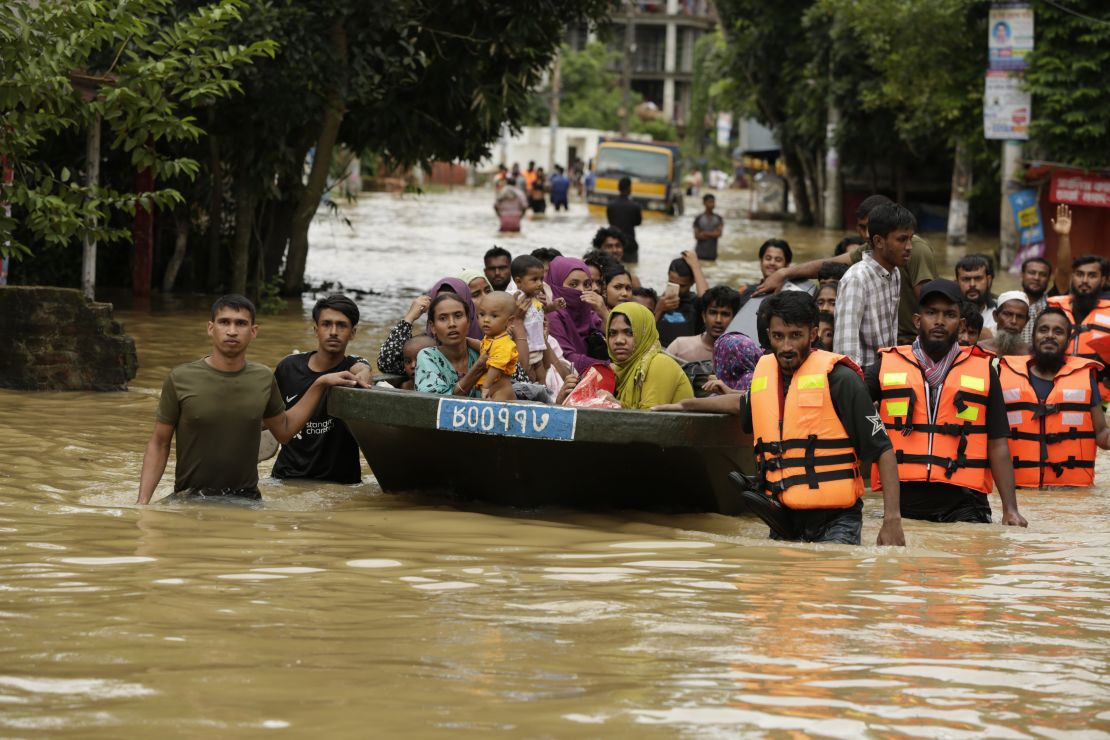
Despite the difficulties, the local and international community’s efforts have been significant. The army and navy have been mobilized, and volunteers from across the country have joined the rescue missions. Yet, many people remain trapped in remote areas, cut off from help.
Yasin Arafat, a 24-year-old from Dhaka, arrived in Feni to rescue his family, but he has been unable to find a boat to reach them. “They have no water, no food, and they’re very scared,” he said, his voice filled with worry.
As night falls, the rescue operations continue, with the hope that those stranded will survive long enough for help to arrive or for the floodwaters to recede. The people of Feni are left waiting, desperate for relief and angry at what they perceive as an avoidable disaster.
East Africa is witnessing a sharp rise in mpox cases, with Burundi recently confirming 171 cases in key border areas. The outbreak has sparked concern across the region and beyond, as global cases continue to climb.
One of the affected individuals, Samuel Nduwimana, shared his harrowing experience from an isolation ward in Bujumbura, Burundi’s economic capital. “I felt very sick and scared; I couldn’t even walk anymore,” Nduwimana recounted. His face and upper body were marked with painful lesions, typical of the disease.
Nduwimana initially mistook his symptoms for malaria, experiencing a loss of appetite, fever, and a painful pimple on his genitals. “I didn’t even know what I was suffering from,” he said, explaining how his condition deteriorated before he sought medical help.
Mpox, formerly known as monkeypox, is a viral disease transmitted to humans through infected animals and close physical contact with infected individuals. Although it has been recognized for decades, a new, more transmissible and deadly strain known as Clade 1b has fueled the recent increase in cases.
Burundi, which confirmed 171 cases earlier this week, is not alone in battling the outbreak. Kenya reported its second case on Friday, while neighboring Uganda has documented four cases. The global situation is also alarming, with reports of mpox in Europe and Asia, prompting the World Health Organization to declare an international health emergency.
Burundian health authorities are racing to contain the spread. Dr. Odette Nsavyimana, who treats infected patients, described the severity of the cases. “Sometimes patients come in a severe, critical condition with a fever of 39 degrees Celsius,” she said, noting the intense pain and itchiness caused by the lesions, which require urgent treatment.
The King Khaled Teaching Hospital in Bujumbura offers free treatment and can accommodate around 50 patients, according to Liliane Nkengurutse, the national director for the Centre for Public Health Emergency Operations. Nkengurutse highlighted the increasing number of cases, particularly from “hot zones” along the border with the Democratic Republic of Congo (DRC). “Cases [are now] almost all over the country,” she said.
The DRC has reported a staggering 16,700 cases and more than 570 deaths this year alone, as stated by the country’s health minister. In contrast, Burundi has managed to avoid fatalities so far, thanks to early detection and prompt treatment. “We still don’t have any deaths because we’re lucky enough to detect cases quickly and take care of them early,” Nkengurutse explained.
Nduwimana, who expressed gratitude for the care he received, urged others who suspect they might have mpox to seek medical attention immediately. “They need to rush to the hospital for treatment,” he advised. “This epidemic is very serious. It hurts a lot, you’re in too much pain, and you don’t know what to do.”
Robert F. Kennedy Jr., a prominent figure in the Party and scion of the Kennedy lineage, has made a significant announcement regarding his independent run for the US presidency. The 70-year-old political figure declared his decision to suspend his presidential campaign and extend his support to Donald Trump’s campaign for the upcoming election.
Speaking at a press conference in Phoenix, Arizona, Mr. Kennedy emphasized that his longstanding Democratic affiliations had guided him toward this unexpected move to endorse President Trump. Despite his decision to back Trump, he clarified that he would not withdraw from the race but would instead seek to remove his name from the ballot in ten key battleground states.
President Trump, acknowledging the endorsement, expressed gratitude, describing Mr. Kennedy as a “great guy.” In response, Democratic rival Kamala Harris expressed her commitment to earning the support of voters who were previously aligned with Kennedy’s campaign.
As the November election approaches, Robert F. Kennedy Jr.’s polling numbers have experienced a decline from previous double-digit figures due to dwindling funds and diminishing national coverage. His decision to support a Republican candidate for the presidency has elicited strong reactions from his family members, with his sister, Kerry Kennedy, characterizing it as a betrayal of cherished family values.
In his justification for endorsing Trump, Mr. Kennedy cited alignment on key issues, including Trump’s stance on negotiations to potentially end the conflict in Ukraine. Despite existing differences, he noted common ground on critical matters.
Acknowledging the challenges his decision presents to his family and friends, Mr. Kennedy expressed a sense of internal peace with his choice. His wife, Cheryl Hines, also respected his decision to suspend his campaign, though she refrained from commenting on his endorsement of Trump.
The two-party system’s complexities and the difficulty of introducing fresh perspectives into the political arena were highlighted by Mr. Kennedy’s announcement, signifying a turning point in the upcoming election dynamics.
DFN Insights continues to monitor these developments closely and will provide further updates on the evolving political landscape.